


The Long Way Around
Under the coffee table, I could see only ankles. My mum’s shoes turned slightly inward when she leaned toward Aunty Ivy. Smoke drifted above me — my dad’s cigarette burning down unnoticed, Uncle George tamping his pipe — and the television flickered against the underside of the wood. I was quiet enough that they forgot I was there. I liked it that way.
Most Saturdays were full of laughter. Stories of school days and dances and who had married whom. Aunty Ivy would laugh until she cried, removing her glasses to wipe her eyes, her face going red as though the joke had risen all the way through her. But sometimes the laughter thinned. Their shoulders curled toward one another. Two words slipped out under breath — blue devils — and the room seemed to fold in on itself.
I knew about the Red Devils, the aerobatic team. The phrase sounded similar enough that I lifted my head and offered it cheerfully, pleased to have something to contribute. The silence that followed was immediate. Both women looked down at me. Someone said, “Little jugs have big ears.” My dad and Uncle George glanced over from their chairs at the edges of the room. I felt my body contract before I understood why. I curled inward and retreated beneath the table, back to my book. I knew I had done something wrong. I did not know what it was.
In the mining community where my parents grew up, violence was not extraordinary. Some men died underground, and many more came home diminished. Lungs failed slowly. Backs gave way. The health of my mum’s three brothers was broken by years beneath the surface. All three died young. Boys were caned indiscriminately at school until their hands swelled or they could not sit. Fathers beat sons and called it discipline. Some men drank and struck their wives. It was spoken about the way bad weather is spoken about — not defended, not dramatized, simply acknowledged.
When my mum told Aunty Ivy that my grandfather used to get the blue devils — after four years in the trenches, after being gassed, after breaking his back in a mining accident — there was no horror in her voice. There was something closer to relief. There were consequences. Life continued.
I absorbed that register long before I understood the meaning. Some things were endured. Certain words lowered the temperature of a room. If I crossed into them, I should make myself smaller.
Years later, early in my career, a woman asked me to walk with her through a manufacturing plant to get to a meeting. I was busy and a little exasperated that she was waiting for me, but she waited anyway. As we walked the most direct route across the floor, men stopped their conversations. Heads turned. The walls were lined with posters of topless women from The Sun, taped up above machinery and workstations. I had seen them countless times and never thought about what they meant. That day, I noticed where her eyes did not go.
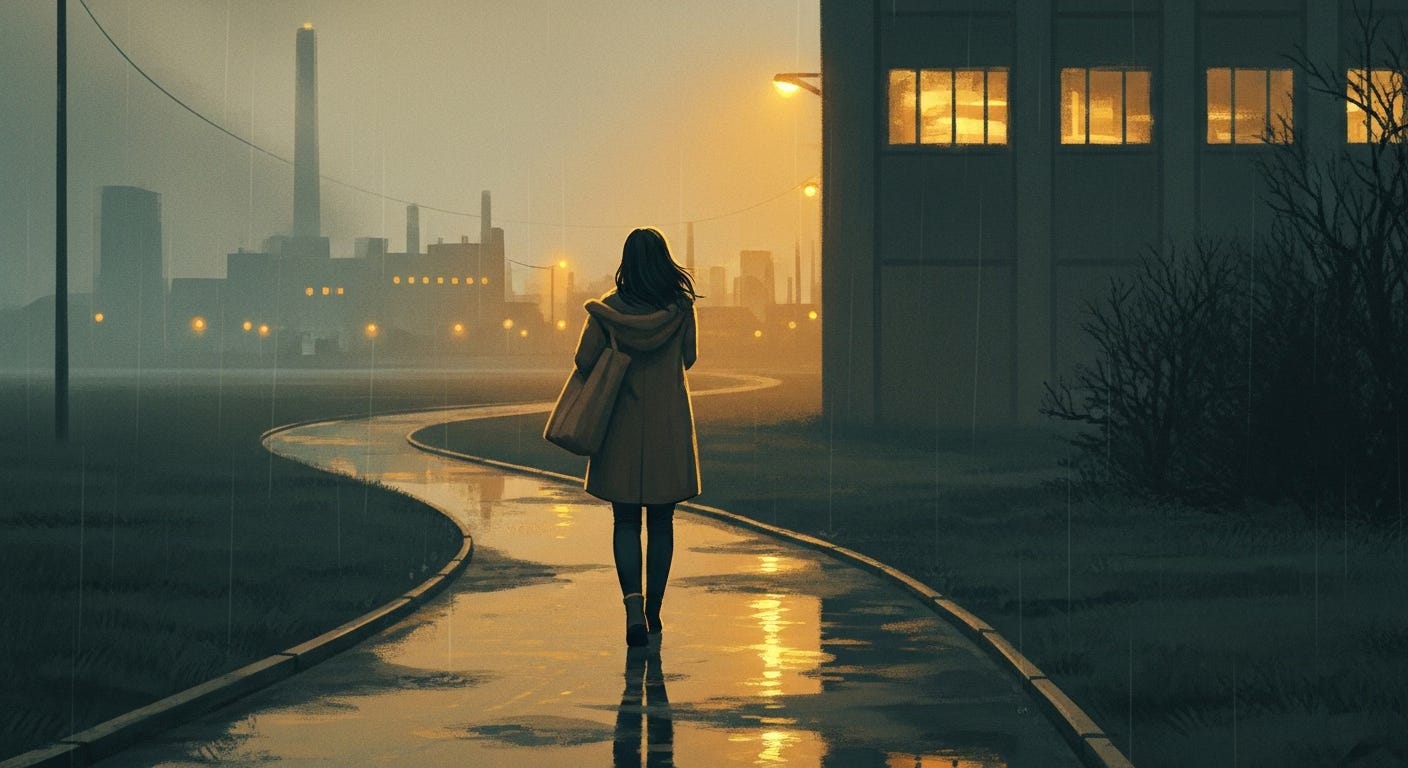
When we reached the meeting room, I apologized on the men’s behalf. She told me it had not been that bad because I was there. If she had been alone, she said, there would have been comments — whistles, crude remarks offered as jokes, the kind that expect you either to laugh or to absorb them. She would have taken the long way around the building instead, even in the rain, rather than cross the floor alone.
It unsettled me more than I let on. I had thought myself harmless in that space. I had not considered that harmless was not the same as neutral. My presence altered the moment, not the structure. The posters would still be there the next day. The men would still stop what they were doing and stare at her. I had crossed that factory floor countless times without noticing what it required of someone walking it alone — without calculating distance to an exit, without choosing a route that kept attention brief.
I grew up in rooms where women lowered their voices and men did not need to. I learned early how to retreat when I crossed into something I did not understand. It took much longer to recognize how easily I moved through spaces that required others to adjust.
Some routes are shorter. Some are safer. I was slow to see the difference.
About the Author
Robert M. Ford is a writer, strategist, and co-founder of Toolsie, an AI-powered platform making technology more intuitive, personal, and human-centered. He also leads Reverie House, a literary imprint focused on emotionally resonant storytelling. His work—whether through poetry, fiction, or the tools he builds—explores memory, identity, and the quiet moments that shape who we’re becoming. More at brittleviews.com.

Hearing you read this story aloud last evening was so extraordinary. Thank you for sharing it with us. Sharon
Love this essay, Robert. Reminds me of similar experiences I've had in my life, especially the expereince of your female colleague at the factory. I love the way you wrote about it. Sharon